

River Swimming With a Border Collie — A Summer Water-Safety Framework
For many Border Collies, water is irresistible.
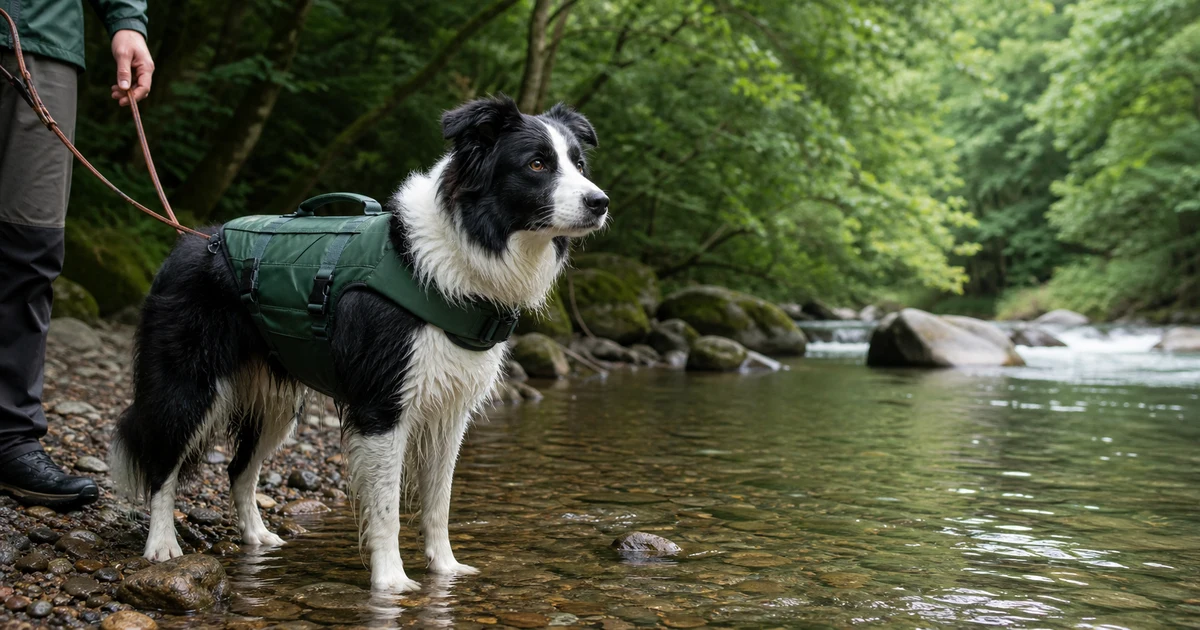
It cools the body, reduces impact compared with hard running, and opens a world of scent, sound, movement, stones, mud, and shade. A wet dog shaking river water from its coat is not a polished image. It is a real one. Muddy paws, clean eyes, and a body moving through the natural world: that is part of the beauty of a working breed.
But river play is not automatically safe because the water is cool.
Current, depth, footing, water quality, arousal, fatigue, and accidental water ingestion all matter. Most water accidents do not happen because the dog “cannot swim.” They happen because the human misreads the environment.
ROSCH KENNEL is based in the Kirishima environment at roughly 750 m / 2,460 ft elevation, with about 700 tsubo of grounds, approximately 2,300 sq m / 0.57 acre. The setting gives our dogs real outdoor exposure, but it does not remove risk. Nature raises the dog. Science protects the dog.
This guide sets out a practical framework for safe summer river play with a Border Collie.
River Play Is Environmental Management, Not Just Exercise
It is easy to treat swimming as a substitute for running.
That is incomplete. A Border Collie is selected to notice movement. Moving water, floating toys, splashes, birds, children, other dogs, and drifting leaves can all become targets of intense focus.
River play is cooling exercise, but it is also a high-stimulation environment.
The first risks to manage are straightforward.
| Risk | What Can Happen | Management Focus |
|---|---|---|
| Current | A shallow river can still push a dog off balance | Flow speed, exit routes, long line |
| Depth | Sudden drop-offs can trigger panic | Start in shallow water and avoid steep edges |
| Water quality | Algae toxins, bacteria, runoff | Color, smell, foam, local advisories |
| Arousal | The dog keeps swimming past fatigue | Time limits, rest, retrieve count |
| Ingestion | Water intoxication or gastrointestinal upset | Bring fresh water; prevent drinking from the river |
| Aftercare | Ear irritation, skin problems, ticks | Rinse, dry, inspect the coat and paws |
“The dog looks happy” is not enough. Some dogs look happiest when they are closest to overdoing it.
Border Collies Can Hide Fatigue in Water
A Border Collie’s stamina is not only physical. It is also behavioral.
Throw the floating toy. The dog swims out. The dog returns. The handler throws again. The dog keeps working.
That loop can run longer than the body should. Swimming removes the impact of running, but it is not effortless. The dog has to push water with the whole body, hold the head high enough to breathe, use the tail to steer, and fight current or drag from wet coat and gear.
As covered in our article on mental enrichment, this breed does not simply need more stimulation. It needs the skill of disengaging from stimulation.
The same applies near water.
The goal is not “more swimming.” The goal is a dog that can enter, play, come out, settle, and recover.
Check Five Conditions Before the Dog Enters
Do not let the dog rush from the car into the river.
Stand at the bank first. Watch the water. Most water safety decisions are made before the paws get wet.
1. Rain Upstream
Check yesterday’s rain, today’s forecast, and the upstream weather.
The river can rise even if the sky above you is clear. Muddy water, louder-than-usual flow, floating branches, or sudden color change are all reasons to stay out. Around Japan’s rainy-season transition, this matters even more.
2. Current
Shallow water can still be strong.
Start in a section where the dog can stand, the flow is gentle, and the dog can angle back to shore. Avoid weirs, bridge supports, narrow rock channels, deep pools, and fast seams between rocks.
3. Exit Routes
Look for the exit before the entry.
Can the dog climb out without slipping? Can the handler move along the bank? Is there a second exit if the dog drifts? If one side is a concrete wall and the other side is deeper water, choose another spot.
4. Footing
Check wet rocks, algae-covered stones, broken glass, fishing hooks, sharp metal, and unstable gravel.
Border Collies move hard and fast. A small paw-pad cut can end the day. Walk the bank before asking the dog to work there.
5. Other Stimuli
Other dogs, children, anglers, campers, wildlife, and bikes can all change the dog in front of you.
A dog with an unreliable recall should not be off-leash near water. In this environment, recall failure can become a safety failure. For the foundation, see Teaching a Border Collie to Come When Called.
A Life Jacket Is Not Only for Dogs That Cannot Swim
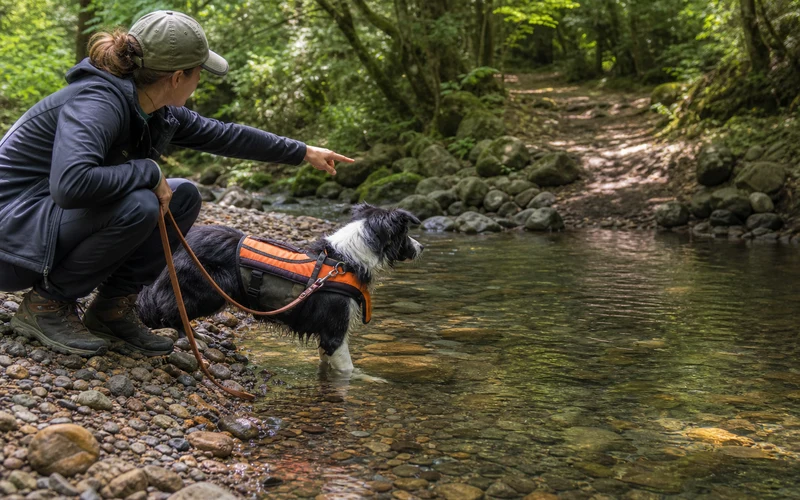
Use a life jacket even for a dog that can swim.
That is not overprotection. It is buoyancy, visibility, and retrieval.
The American Animal Hospital Association recommends assessing swimming ability gradually, supervising pets around water, and using a properly fitted life jacket. A bright or reflective jacket with a sturdy back handle makes the dog easier to see and easier to lift if needed.
Choose a jacket that:
- Supports the chest and abdomen
- Does not compress the throat
- Allows shoulder movement
- Does not rotate in the water
- Has a strong back handle
- Is visible against dark water and shaded banks
- Stays secure when wet, not only when dry
Do not make the first use of the jacket happen at the river. Let the dog wear it on land, then in very shallow water, then during short controlled entries. A dog stressed by unfamiliar gear is not ready for open water.
Clear Water Is Not the Same as Safe Water
Clear water is a good start. It is not a guarantee.
The CDC warns that harmful algal blooms can be deadly for pets and livestock, and animals can become sick within hours after swallowing toxins. Cornell University College of Veterinary Medicine notes that blue-green algae, or cyanobacteria, can produce toxins that damage the liver or nervous system, and prevention is the most effective protection.
Avoid water that has:
- Blue-green, reddish-brown, or paint-like color
- Foam, scum, mats, or surface film
- A rotting plant smell
- Stagnant pond, ditch, or slow reservoir conditions
- Dead fish or small animals on the bank
- Local warnings from public health or park authorities
If you are unsure, keep the dog out.
“Only a little” is not a safety plan. Dogs lick their coats after swimming. The CDC recommends washing animals with clean water after possible exposure and preventing them from licking contaminated fur.
Bring Fresh Water and Prevent River Drinking
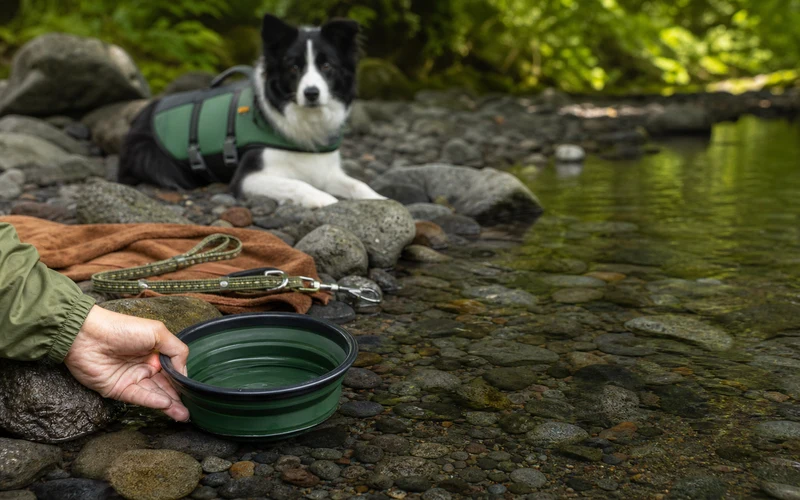
Fresh drinking water is required gear.
If a dog enters the river thirsty, the dog is more likely to drink from the river. That creates two problems: water quality exposure and excessive water ingestion during play.
Cornell’s summer safety guidance notes that dogs who spend a day going in and out of a pool or lake, especially while chasing balls or sticks, may ingest a lot of water. Too much water can dilute electrolytes in the bloodstream and lead to neurological signs, including seizures.
Freshwater intoxication is not common. But it is serious enough to design around.
Use these rules.
- Offer small amounts of fresh water before the dog enters
- Bring the dog out after 10-15 minutes of play
- Avoid continuous retrieves
- Avoid games where the dog bites at the water surface
- Avoid sinking toys and high-arousal hose games
- Watch breathing, coordination, and mental state during rest
- Do not let the dog spend half a day in and out of water without structure
Warning signs include wobbliness, dullness, vomiting, abdominal swelling, drooling, unusual exhaustion, tremors, or seizures. If these appear after water play, contact a veterinarian immediately.
Manage Retrieves by Count, Not by Mood
The most dangerous phrase near water is “one more throw.”
Throw the toy. The dog swims. The dog returns bright-eyed. The human throws again. The loop repeats.
Manage retrieves by number, not by emotion.
Start with three to five retrieves. Do not throw far. Do not let the toy drift downstream. When the dog returns, do not immediately send again. Let the dog shake off, breathe, stand on shore, and lie down.
Do not use sticks. Mouth punctures, throat injuries, submerged branches, and splintering are avoidable risks. Use a buoyant water toy that is durable and too large to swallow.
End the session when you see any of the following:
- Breathing stays heavy after the dog exits
- The climb back to shore slows
- Tail movement becomes weak
- Shivering increases
- The dog stops responding well to cues
- The gait becomes unsteady
The dog may still want more. The human ends the session first.
Cold Water and Limber Tail Still Matter in Summer
Mountain water can stay cold even on a hot day.
In higher-elevation areas such as Kirishima, air temperature and water temperature can tell different stories. Long swimming sessions in cold water can strain the tail muscles. The result may be a limp, painful tail, often called swimmer’s tail or limber tail.
Many cases improve with rest, but the dog may be uncomfortable. Stop activity and consult a veterinarian if the tail hangs abnormally, the dog avoids wagging, sitting changes, or touching the tail base causes pain.
A Border Collie can look weatherproof. Wet coat, wind, fatigue, and shade still lower body temperature. During rest, towel the dog off and watch whether the dog is warming back up or continuing to shiver.
Aftercare Is Part of the Swim
The outing does not end when the dog leaves the water.
Before the dog gets back into the car, or immediately after arriving home, run the aftercare routine.
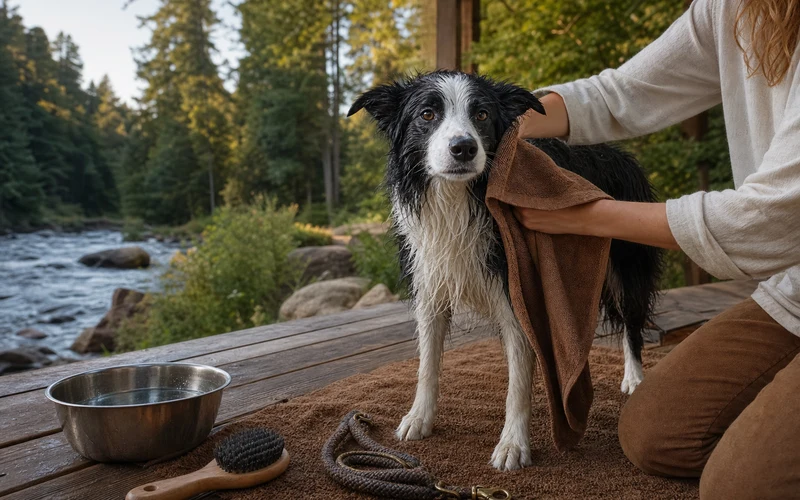
- Rinse the coat with clean water
- Gently dry around the ears
- Dry the chest, abdomen, armpits, groin, and tail base
- Check between paw pads and around nails
- Look for ticks, leeches, cuts, burrs, and small wounds
- Monitor ears, skin, stool, gait, and energy that evening and the next morning
Ears are easy to miss. Moisture and summer humidity can contribute to irritation. Head shaking, scratching, odor, redness, discharge, or discomfort after swimming should be checked early.
Riverbanks are also tick habitat. Wet grass, leaf litter, and wildlife corridors make post-outing inspection non-negotiable. For the broader prevention framework, see Border Collie Tick Prevention.
River-Day Gear Checklist
Bring the basics.
| Gear | Why It Matters |
|---|---|
| Dog life jacket | Adds buoyancy, visibility, and retrieval control |
| Long line | Reduces recall failure and downstream drift risk |
| Fresh water and bowl | Reduces drinking from natural water |
| Two or more towels | Helps prevent chilling and moisture-related skin issues |
| First-aid kit | Covers paw cuts, scrapes, and fishing-hook incidents |
| Spare leash | Backup for wet or damaged equipment |
| Waterproof bag | Separates wet towels and dirty gear |
| Local veterinarian information | Saves time if a problem occurs away from home |
Gear does not replace judgment. It supports it.
The ROSCH KENNEL Standard for Water Days
We do not believe dogs should be kept clean by keeping them disconnected from the natural world.
They should get wet. They should step into mud. They should come home carrying the smell of grass and water.
But nature does not negotiate.
A river is different every day. A safe place yesterday may be unsafe today. A Border Collie can hide fatigue under drive. The human has to make the decision earlier than the dog would.
Our standard is simple.
Let the dog experience nature. Do not send the dog into it unprotected.
Read the current. Read the water color. Read the exit. Read the breathing. Rest the dog. Dry the dog. Watch the next morning.
Data does not lie. So we use numbers, structure, and observation.
Final Checklist
Before you go, confirm:
- You checked rain and upstream conditions
- The life jacket has already been practiced
- You packed a long line, fresh water, and towels
- You checked local water quality advisories
- You will avoid algae, foam, odor, dead fish, or discolored water
- The first session will stop after 10-15 minutes
- Retrieve count is decided before the toy appears
- You will rinse, dry, and check for ticks afterward
- You know when to call a veterinarian
River play can make a Border Collie’s summer richer.
Safety should not depend on luck. Nature raises the dog. Science protects the dog. Keep that order intact.
References
Daily observation is where the next article begins.
Instagram shows the dogs in daily life. The journal turns the themes we notice there into evidence-aware resources.