

Hip Dysplasia in Border Collies — Prevalence, Genetics, Prevention, and Diagnosis
The Border Collie was built to run. Tight flanking turns at full speed, sudden stops on a whistle command, explosive acceleration over rough terrain — all of it depends on a structurally sound skeleton and, above all, healthy hip joints.
Yet canine hip dysplasia (CHD) is a condition that quietly undermines this physical excellence. If allowed to progress untreated, it causes chronic pain, lameness, and the eventual loss of the athleticism that defines the breed. Understanding the science behind hip dysplasia is essential for anyone who owns, plans to breed, or is considering purchasing a Border Collie.
This article draws on peer-reviewed veterinary research, OFA and BVA/KC population statistics, and biomechanical studies to present a clear, evidence-based picture of what hip dysplasia is, how it develops in Border Collies, how it is diagnosed and treated, and how responsible breeding can reduce its prevalence over generations.
Prevalence Data: How Common Is It in Border Collies?
OFA Statistics (United States)
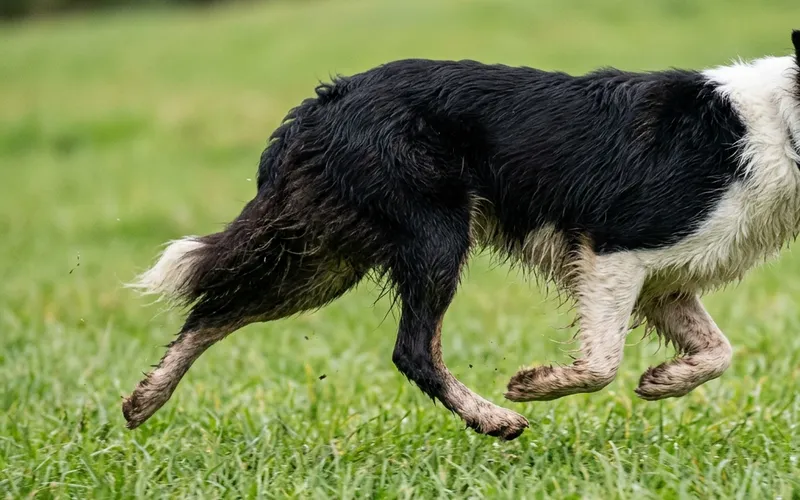
The Orthopedic Foundation for Animals (OFA) maintains the largest canine hip dysplasia registry in North America. Long-term OFA data for Border Collies show an overall prevalence of 10.8% across evaluations from 1974 through 2015. Among dogs born between 2011 and 2015, that figure had declined to 8.4% — reflecting decades of selective breeding pressure. In OFA’s breed rankings, Border Collies place 116th out of all registered breeds (approximately 10.3%), well below high-risk breeds such as the Bulldog (77.7%) or German Shepherd Dog (~20%).
An important caveat: OFA screening is voluntary. Breeders submit radiographs at their own discretion, and images showing obvious dysplasia are frequently withheld from submission. Some veterinary researchers estimate that true prevalence may be roughly double the OFA-reported figure. The data represents what was voluntarily screened, not the broader population.
BVA/KC Hip Score (United Kingdom)
The British Veterinary Association (BVA) and The Kennel Club (KC) operate a mandatory-for-registration hip scoring scheme in which both hip joints are evaluated and assigned a combined score from 0 to 106 — lower is better.
According to BVA breed statistics published in 2022, the Border Collie’s 15-year mean score across 4,218 dogs is 12, with a median of 10. The 5-year rolling median — which sets the recommended breed threshold — is also 10. Breeders are advised to use only dogs scoring at or below this threshold in their breeding programs.
For context: the Rough Collie 5-year median is 9; the Australian Shepherd is 10. Border Collies sit within a similar risk profile to related herding breeds.
PennHIP Distraction Index
PennHIP quantifies joint laxity using the Distraction Index (DI) — a ratio between femoral head displacement and femoral head radius during standardized distraction. A DI of 0 indicates a perfectly tight joint; 1.0 indicates complete subluxation. Research consistently shows that DI ≥ 0.30 is associated with an increased lifetime risk of osteoarthritis.
According to the PennHIP breed database (Welborn, K., Antech Imaging Services, 2010), the Border Collie breed mean DI is 0.48 — in the moderate-risk range. For comparison: Labrador Retriever 0.49, German Shepherd Dog 0.43, Australian Shepherd 0.47, Bearded Collie 0.58.
The Genetic Architecture of Hip Dysplasia
Heritability: What h² = 0.61 Tells Us
Hip dysplasia is a polygenic disease — driven not by a single faulty gene but by the cumulative, additive effects of many genetic variants across multiple loci. This makes it fundamentally different from single-gene disorders such as Collie Eye Anomaly or MDR1.
Sanchez-Molano and colleagues (2014, BMC Genomics) estimated breed-specific heritability in Border Collies at h² = 0.61 ± 0.03 for hip joint dysplasia. Heritability (h²) ranges from 0 to 1.0, with higher values indicating that a greater proportion of phenotypic variation is explained by genetics. At h² = 0.61, roughly 61% of the variation in hip joint quality is attributable to inherited factors. Crucially, h² above 0.50 is generally considered the threshold at which selective breeding can meaningfully improve population health — Border Collies are above that line.
Additionally, the genetic correlation between hip and elbow dysplasia in Border Collies was estimated at r_g = 0.53 ± 0.28, suggesting that selection against CHD may also confer indirect improvement in elbow joint health.
GWAS-Identified Candidate Regions
Genome-wide association studies (GWAS) across multiple breeds have identified chromosomal regions significantly associated with canine hip dysplasia. Chromosomes 3, 11, and 30 (CFA3, CFA11, CFA30) show the strongest signals, with candidate genes including EVC, EVC2, PTPRD, COL15A1, LAMA2, and COL6A3 — all involved in chondrocyte differentiation and extracellular matrix integrity (Emerging insights into the genetic basis of canine hip dysplasia, PMC6070022). A single QTL has been reported to explain up to approximately 20% of phenotypic variance. However, the full genomic architecture remains complex, and no single-gene test currently predicts CHD with clinical reliability.
Long-Term Selective Breeding: Evidence from Border Collie Data
Mészáros and colleagues (2020, Animals, PMC7601391) analyzed 13,339 Border Collies born between 1990 and 2016, with pedigree completeness of 99.6% across 15 generations. Their key finding: ancestral inbreeding coefficient (F_BAL) was significantly associated with improved hip joint scores (p = 0.003). This is consistent with the mechanism of “inbreeding purge” — the elimination of deleterious alleles through repeated exposure to homozygosity over generations. It was the first study to demonstrate this purging effect on CHD in a Border Collie population. The practical implication is that sustained, multigenerational selection on hip health creates cumulative genetic improvement — not just in individual dogs, but across the entire breeding population.
Environmental Risk Factors
Genetics Is Not the Whole Story
A heritability of 0.61 also means that approximately 39% of hip joint quality variation is attributable to non-genetic factors. Classical research by Kasstrom (1975) and Riser (1985), as well as subsequent controlled trials, has established that environment — particularly nutrition and exercise during growth — can substantially influence whether a genetically susceptible dog develops clinical hip dysplasia.
Overfeeding and Rapid Growth
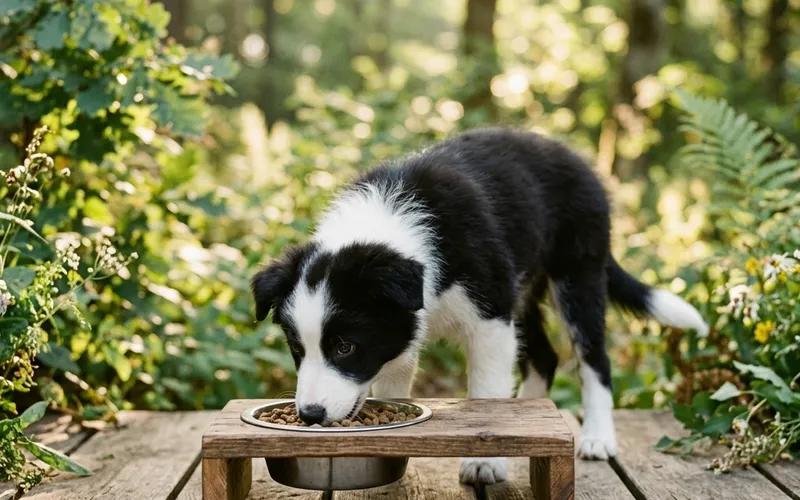
Excess caloric intake during the first six months of life is the single largest environmental risk factor for hip dysplasia in predisposed individuals. When bone growth outpaces cartilage maturation, immature hip joints bear loads they are not yet equipped to handle, leading to femoral head subluxation and joint remodeling. Multiple studies have shown that controlled growth rates — achieved through caloric restriction — significantly reduce CHD incidence and severity (Kasstrom, 1975; PubMed: 1604770). The goal is not maximum growth but optimal growth.
Excess Calcium Supplementation
Over-supplementation with calcium during the growth phase delays endochondral ossification and suppresses osteoclast activity, disrupting the normal bone remodeling process. Dogs fed a complete, balanced commercial diet formulated for large breeds do not require additional calcium supplementation — in fact, adding it may do more harm than good.
Exercise Timing and Type
The period from 3 to 8 months of age is considered the critical window for hip joint formation. During this phase, repetitive high-impact activities (e.g., jumping, stair climbing, prolonged running on hard surfaces) place abnormal mechanical stress on developing joints. Low-impact exercise — swimming in particular — supports muscle development without joint overloading and may contribute to long-term joint stability.
Diagnostic Methods: OFA vs. PennHIP
OFA — Widely Used, but Limited Sensitivity
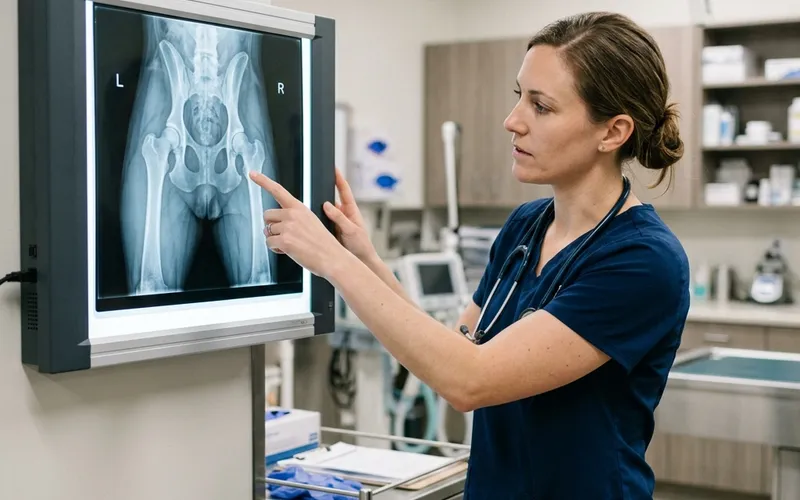
Standard OFA evaluation involves a single extended-hip radiograph taken under sedation, scored by board-certified radiologists on a seven-point scale (Excellent, Good, Fair, Borderline, Mild, Moderate, Severe). Final certification is available from 24 months of age.
The most cited limitation of OFA is its low sensitivity. Smith and colleagues (2001, JAVMA) showed that of 367 dogs evaluated as “normal” by OFA, 293 (80%) had a PennHIP DI ≥ 0.30 — the threshold associated with elevated osteoarthritis risk (Smith et al., 2001). OFA scoring is a morphological assessment at a single time point; it does not measure joint laxity directly, and it misses many dogs that carry the laxity-driven risk of future joint disease.
PennHIP — Earlier, More Objective, More Predictive
PennHIP uses three standardized radiographic views to calculate the Distraction Index (DI) — a numerical, reproducible measure of passive joint laxity. The critical advantage is that PennHIP can be performed from 16 weeks of age, enabling breeders to screen breeding candidates far earlier than OFA allows.
The DI has been validated as a statistically significant predictor of future osteoarthritis development, with higher predictive accuracy than OFA evaluation. For breeding program purposes, PennHIP’s objective DI allows direct comparison across dogs and tracks breed-level trends over time.
The limitation is practical: PennHIP is administered only by certified veterinarians who have completed specific training, and availability is more limited than OFA, particularly outside North America.
Treatment Options
Conservative Management
For mild to moderate cases, or where surgical risk is elevated, conservative management addresses pain and function without joint surgery.
- NSAIDs (non-steroidal anti-inflammatory drugs): First-line analgesic therapy; GI protection is warranted for long-term use
- NGF inhibitor monoclonal antibodies (e.g., Bedinvetmab/Librela®): An emerging option for chronic osteoarthritis pain management that targets nerve growth factor signaling
- Physical rehabilitation and hydrotherapy: Evidence supports reduction in pain and maintenance of muscle mass; swimming is particularly effective for minimizing joint impact
- Weight management: Reducing mechanical load on the joint is the most straightforward intervention and amplifies the benefit of all other conservative measures
Surgical Options
Surgical intervention is selected based on patient age, degree of OA change, and orthopedic assessment (ACVS, acvs.org).
Triple Pelvic Osteotomy (TPO)
Indicated in young dogs (6–12 months) with passive joint laxity but minimal osteoarthritic changes. The pelvis is cut in three locations and rotated to increase femoral head coverage. Reported success rates are 86–95% at 12 months, with 5-year outcomes around 95%. Early detection is key — this window closes as OA develops.
Total Hip Replacement (THR)
The definitive treatment for moderate to severe hip dysplasia with established osteoarthritis, available for dogs 12 months and older. Success rates of 90–98% and 5-year outcomes of 90–95% make THR the gold standard for functional recovery (PMC10087566; multi-user registry study of 461 owners, 2023). Cost is the primary barrier, but for otherwise healthy dogs with severe CHD, it offers the most complete restoration of joint function.
Femoral Head and Neck Ostectomy (FHO)
A salvage procedure involving removal of the femoral head, allowing a false joint to form from fibrous tissue. More suitable for dogs under approximately 18 kg (40 lbs), with a reported success rate of 62.8% (good outcome or better). Used when other surgical options are not indicated or financially prohibitive.
Breeding Strategy and Prevention
Why Screening Both Parents Matters
With h² = 0.61, selection pressure on breeding stock has measurable impact on population-level prevalence. OFA’s long-term data confirm this: CHD prevalence in Border Collies has declined from 10.8% (full historical dataset) to 8.4% (2011–2015 cohort) — a direct reflection of decades of breeder-level screening and selection.
The UK’s Estimated Breeding Value (EBV) system, operated by the Kennel Club, integrates scores from relatives across multiple generations to generate a breeding value for each individual. Dogs with a negative EBV (below breed mean) and confidence level of 60% or above are recommended for breeding. This approach leverages the full pedigree — not just the individual dog’s score — for more accurate genetic selection.
The Multigenerational View
The core lesson from Mészáros et al. (2020) is that hip health improvement is a multigenerational project. Confirming a single dog’s hip score before breeding is necessary but not sufficient. What drives meaningful population change is consistent screening across generations, tracking of genetic trends within breeding lines, and selection decisions that balance hip health data against other breed qualities.
Hip evaluation is not a one-time checkbox. Records, family trends, and selection decisions have to be followed across generations.
About ROSCH KENNEL: A Border Collie specialist breeder based in Kirishima, Kagoshima, Japan — at 750 m elevation in Kirishima-Kinkowan National Park. All breeding dogs undergo 15+ genetic health panels, and all results are publicly disclosed.
References
- Mészáros, G., et al. (2020). “Effects of Long-Term Selection in the Border Collie Dog Breed: Inbreeding Purge of Canine Hip and Elbow Dysplasia.” Animals, 10(10), 1743. PMC7601391
- Sanchez-Molano, E., et al. (2014). “Estimation of Genetic Parameters for Hip and Elbow Dysplasia in Border Collies.” BMC Genomics.
- Smith, G. K., et al. (2001). “Evaluation of risk factors for degenerative joint disease associated with hip dysplasia in German Shepherd Dogs, Golden Retrievers, Labrador Retrievers, and Rottweilers.” Journal of the American Veterinary Medical Association, 219(12), 1719–1724. [PubMed ID to be verified]
- Kasstrom, H. (1975). “Nutrition, weight gain and development of hip dysplasia.” Acta Radiologica Supplement, 344, 135–179. PubMed: 1604770
- BVA. (2022). Hip Dysplasia Scheme Breed Specific Statistics 2022. British Veterinary Association.
- OFA. Disease Statistics — Border Collie. Orthopedic Foundation for Animals. ofa.org
- Welborn, K. (2010). PennHIP Breed Distraction Index Database. Antech Imaging Services.
- Emerging insights into the genetic basis of canine hip dysplasia. PMC6070022.
- Total Hip Replacement Multiuser Registry Outcomes Study (2023). PMC10087566.
- ACVS. Canine Hip Dysplasia. American College of Veterinary Surgeons. acvs.org
Daily observation is where the next article begins.
Instagram shows the dogs in daily life. The journal turns the themes we notice there into evidence-aware resources.