


What You Should Know Before Getting a Border Collie
Introduction
The Border Collie consistently ranks at the very top of canine intelligence tests. Their capacity for learning and drive to work eclipses that of virtually every other breed. But that brilliance comes with a caveat: this is not a dog for everyone.
ROSCH KENNEL receives inquiries year-round, and there’s something we feel compelled to be upfront about. A Border Collie can be an extraordinary life partner — one that enriches every aspect of its owner’s world. But without the right environment, this breed will exhaust its owner just as quickly as it charms them.
This article starts with a perspective we’ve formed through years of specialist breeding, then walks through five essential points every prospective owner should understand.
A Breeder’s Conviction — What Matters More Than Exercise
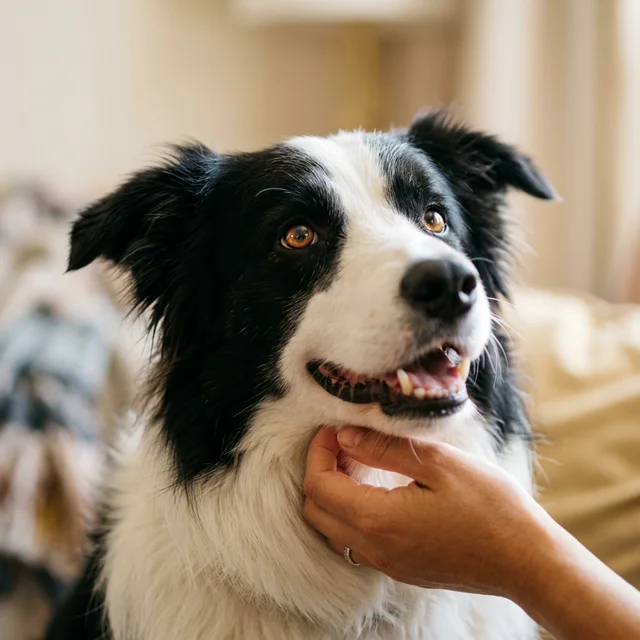
Conventional wisdom holds that the single most important factor for a Border Collie is exercise — specifically, physically and mentally stimulating exercise.
We half agree. But we half disagree.
Through years of breeding and following hundreds of Border Collies in their new homes, we’ve come to believe there’s something even more essential than exercise or intellectual stimulation — a prerequisite that supersedes them both.
It’s communication with the owner — nothing more, nothing less.
Communication Is the Foundation of Everything
When a deep, ongoing communicative bond exists between dog and owner, behavioral problems rarely surface — even if daily exercise falls short of the theoretical ideal. This is an observation formed through years of first-hand experience, not a clinically proven claim. But the pattern is remarkably consistent.
The reason is straightforward.
Dense, genuine interaction with a human is intellectual stimulation for a Border Collie. Reading the owner’s eyes, parsing vocal tone, interpreting body language, inferring meaning from words — all of this keeps the dog’s brain in high gear. Rich communication inherently contains the mental stimulation the breed craves.
Conversely, three hours of running per day means little if the owner is merely a silent presence — physically there, but mentally elsewhere. That dog will remain unfulfilled.
What a Border Collie truly seeks is not “doing things together” but rather “being together” — or more precisely, “sharing the felt sense of togetherness through ongoing communication”.
What Science Suggests
This conviction is grounded in observational experience, not controlled experiment. However, recent findings in animal behavior science and comparative cognition align with this perspective.
The Oxytocin-Gaze Positive Feedback Loop
In 2015, Nagasawa et al. published a landmark study in Science demonstrating that when dogs and their owners engage in mutual gaze, oxytocin levels rise in both parties. Further, this oxytocin increase promotes longer eye contact, which in turn raises oxytocin further — creating a self-reinforcing positive feedback loop.
Crucially, this phenomenon was not observed in wolves, suggesting that through domestication, dogs independently evolved a hormonal bonding mechanism paralleling the parent-infant bond in humans.
In a breed as attuned to humans as the Border Collie, this loop may operate with particular intensity. Daily communication — voice, eye contact, collaborative effort — is not simply “quality time.” It’s a physiological process that acts directly on the dog’s neuroendocrine system.
The Secure Base Effect
Attachment theory research has confirmed that dogs use their owners as a “secure base.” Studies adapting Ainsworth’s Strange Situation Test to dogs show that dogs explore their environment more actively when their owner is present — an effect not replicated by strangers.
Stable, consistent communication strengthens this secure base function. When the base is solid, the dog adapts more flexibly to environmental changes, and anxiety-driven behavioral issues become far less likely.
Correlation Between Owner Psychology and Dog Behavior
Multiple studies report significant correlation between owner mental health and the incidence of behavioral problems in their dogs. Dogs living with anxiety-prone owners are more likely to exhibit aggression and anxiety-related behaviors themselves. This strongly suggests that the quality of a dog’s behavior depends more on the quality of the owner-dog relationship than on exercise volume alone.
We’re Not Dismissing the Value of Exercise
To be clear: we are not saying exercise is unimportant. The Border Collie has been selectively bred as a herding dog for centuries and possesses exceptional physical capability and endurance. They need outlets for that energy. The ideal state is one where both communication and exercise are amply met.
But the belief that “more exercise solves everything” is dangerous. Plenty of Border Collies receive ample physical activity yet still develop behavioral problems. What these dogs consistently have in common is a deficit in meaningful, heart-engaged communication with their owner.
Our recommendation: establish communication as the first priority, then build exercise and intellectual stimulation on top of that foundation.
1. A Daily Walk Alone Won’t Cut It

A Border Collie’s exercise needs are two to three times those of a typical companion breed. One hour of leash walking per day is insufficient — a minimum of two hours of vigorous, active exercise daily is recommended.
But “exercise” here doesn’t mean a simple leash walk. The ideal is owner-engaged, communication-rich physical activity:
- Frisbee and fetch (a two-way exchange: throw, retrieve, repeat)
- Agility training (reading the handler’s cues while navigating a course)
- Nose work (finding items the owner has hidden — a collaborative search)
- Trail running (the unity of sharing pace and path)
- Training walks (issuing commands while walking and confirming responses)
The key isn’t just tiring the body. It’s providing the mental satisfaction that comes from interactive back-and-forth with the owner.
2. Intellectual Stimulation Lives Within Communication
A Border Collie’s mind is always seeking work. Without a task, the dog will invent one — and its self-assigned “job” usually manifests as behavior the owner finds far from welcome: furniture destruction, excessive barking, compulsive behavioral patterns.
Yet “work” need not be a special activity. Day-to-day communication with the owner can be the most accessible and effective “job” of all.
Effective forms of intellectual stimulation:
- Learning new tricks with the owner (a Border Collie can master one to two new commands per week)
- The daily cycle of “command → execute → praise”
- Puzzle feeders and Kongs for mealtimes
- Herding training (supervised sheep-herding experiences)
- Obedience training
“This breed is smart, so they’re easy to own” is the single most common misconception. Their intelligence demands an equally engaged, communicative owner.
3. Understanding the Temperament — Sensitivity and Strength in One Package

The Border Collie is an astonishingly sensitive breed. They read subtle shifts in their owner’s emotions, distinguish nuances in vocal tone, and react to the slightest deviation from daily routine.
This sensitivity can present as:
- Environmental sensitivity: Heightened reactions to unfamiliar places or startling sounds
- Owner dependency: Intense anxiety when separated from the owner (separation anxiety)
- Stress responses: Repetitive behaviors under stress (shadow chasing, tail chasing)
At the same time, a Border Collie at work displays remarkable toughness. Rain or wind, they’ll see the job through. This coexistence of sensitivity and resilience is the breed’s most captivating — and most challenging — characteristic.
This sensitivity also means their receptiveness to communication is extraordinarily high. Because they can detect minute changes in voice and expression, the quality of daily communication directly shapes behavior.
4. Setting Up the Right Living Environment
Before bringing a Border Collie home, honestly assess whether the following conditions are in place:
- Adequate space for exercise: Apartment living isn’t impossible, but having a nearby open field for daily off-leash running is strongly recommended
- Secure fencing: Border Collies are impressive jumpers. A minimum fence height of five feet (1.5 meters) is essential
- Family agreement: Raising a Border Collie requires commitment from the entire household
- Time commitment: Full-day absences are poorly suited to this breed. Does your lifestyle allow sufficient daily time with the dog?
- Willingness to communicate: Not simply “being there,” but actively speaking to, making eye contact with, and engaging in daily dialogue with the dog
ROSCH KENNEL’s dogs grow up at an elevation of 750 meters on the Kirishima highlands, running freely through vast natural terrain. We don’t claim this is the only ideal — but a space where dogs can simply be dogs is non-negotiable.
5. A Lifelong Commitment to Health Management
The Border Collie’s average lifespan is 12 to 15 years. Throughout that span, the following ongoing health care is essential:
- Regular health check-ups: A comprehensive annual examination
- Understanding of hereditary conditions: Familiarity with DNA test results for CEA, TNS, CL, MDR1, and others, shared proactively with your veterinarian. Note that DNA testing only covers conditions whose causative genes have been identified — conditions like epilepsy and epigenetic factors (environmentally influenced gene expression) require vigilance beyond what any test can provide
- Hip and elbow management: Palpation assessment and exercise plans that minimize joint stress. These are multifactorial conditions influenced by nutrition and exercise as well as genetics
- Mental health: Early detection and management of stress signals
- Proper nutrition: Dietary adjustments matched to each life stage
Health management is a responsibility that begins the moment a dog enters your life and never ends.
Final Thoughts
If you’ve read this far and still feel drawn to a Border Collie, you’re likely a good match. The people who understand the challenges and remain captivated are, in our experience, the ones who become this breed’s finest partners.
One more thing. Once you bring a Border Collie home, don’t overthink it — just talk to them. Call their name, make eye contact, ask “How was your day?” You’ll be astonished at how fully this breed responds to nothing more than genuine conversation.
Exercise matters. Intellectual stimulation matters. But at the root of it all is truthful, trust-filled communication with the owner.
ROSCH KENNEL encourages all prospective families to visit in person. See the environment, the dogs’ responses, and whether this breed fits your actual life before making the decision.
Daily observation is where the next article begins.
Instagram shows the dogs in daily life. The journal turns the themes we notice there into evidence-aware resources.